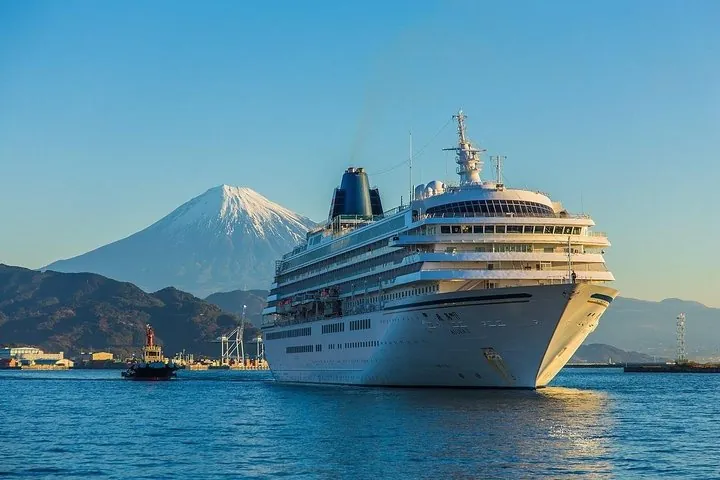
Step off the ship at Shimizu and you are standing in the middle of Japanese tea country. The hills behind the port are green with it, the souvenir shops are stacked with it, and almost every guide will tell you Shizuoka is Japan’s number one tea prefecture.
That last part is no longer quite true — and the real story is more interesting. Here’s what a cruise passenger can actually see, drink and buy in a single day ashore.
The state of Shizuoka tea in 2026
For 65 years Shizuoka was Japan’s largest tea producer, uninterrupted since 1959. Then it lost the crown. Kagoshima overtook Shizuoka in raw-tea (aracha) production in 2024 — 27,000 tonnes against Shizuoka’s 25,800 — and pulled further ahead in 2025, when Shizuoka fell 7% to 24,100 tonnes against Kagoshima’s 30,000. In 2025 Kagoshima also took the first-flush crown for the first time since records began in 1991.
So why does Shizuoka still call itself the home of Japanese tea? Because volume isn’t the whole story. Shizuoka remains number one in Japan for tea cultivation area and for the value of its crude-tea output — it grows the most tea land and earns the most from it, and it has done the cultural work for four centuries. The prefecture is now pushing hard into tencha, the shaded leaf that becomes matcha, to answer the global matcha boom.
Translation for your day ashore: this is still the place to taste, and the landscape is still the real thing.
See it: the tea hills behind the port
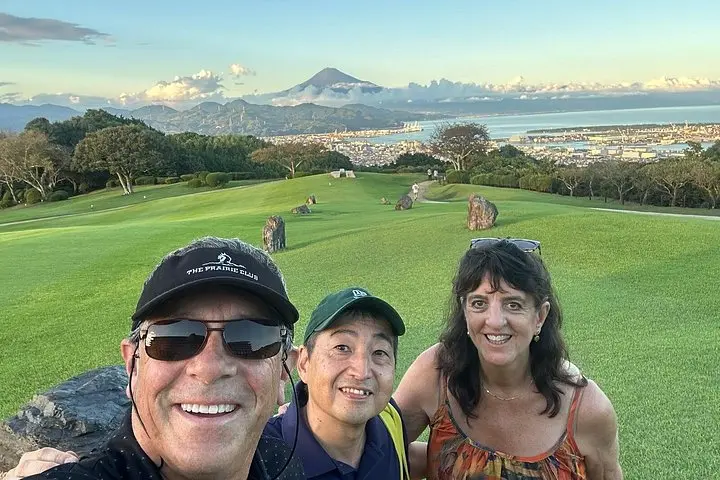
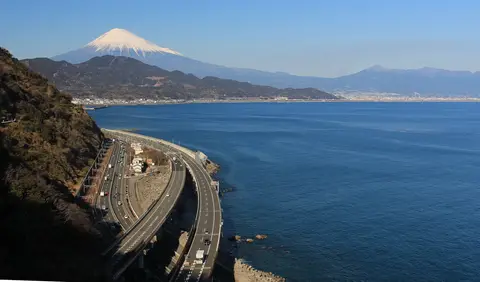
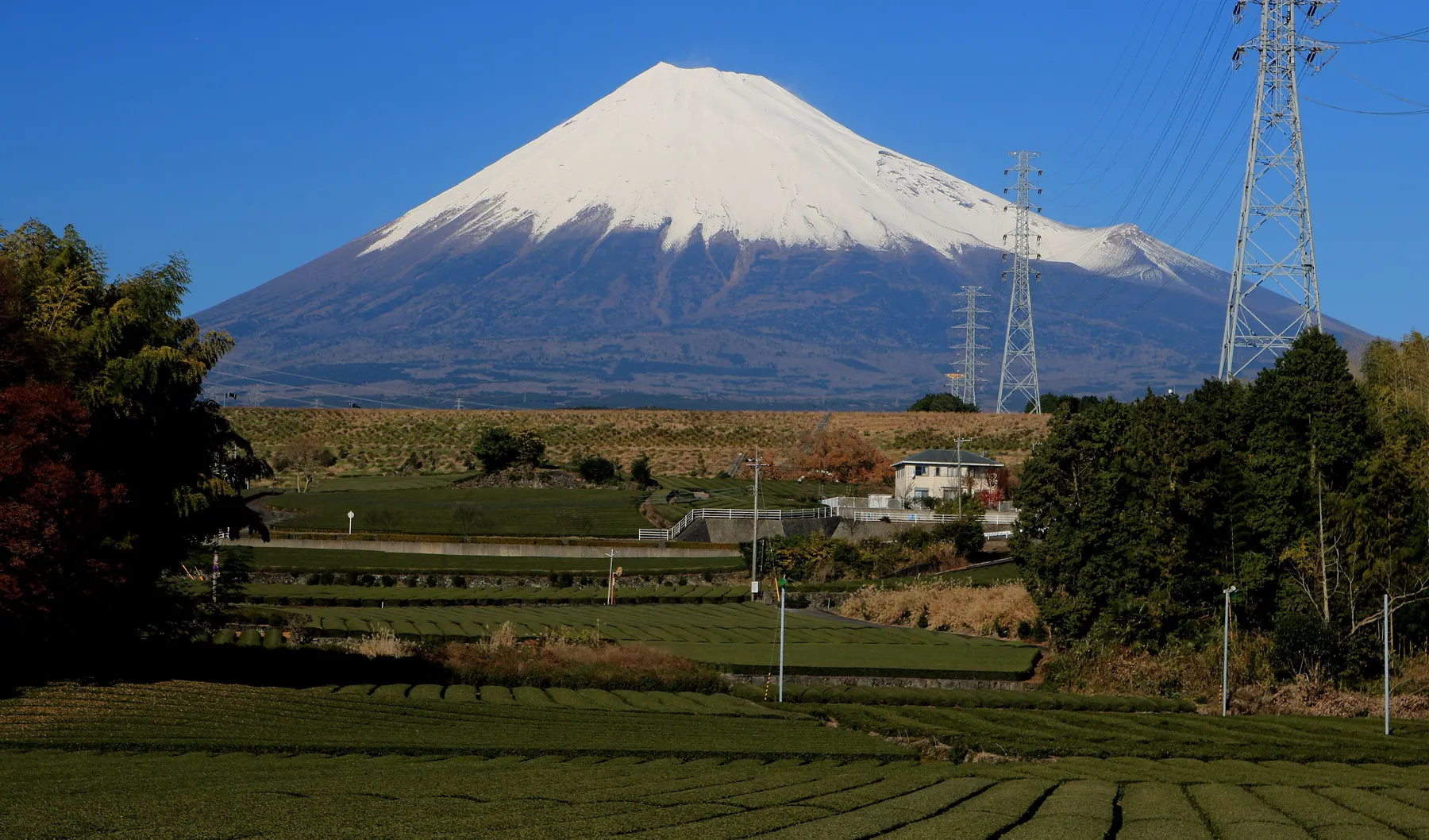
The tea grows on the slopes right above Shimizu — you’ll see the neat, rounded hedgerows on the way up to Nihondaira, the plateau that gives you Mt. Fuji on one side and Suruga Bay on the other. These hills have grown tea for the ruling class since the Tokugawa era: Tokugawa Ieyasu retired to Sunpu — today’s Shizuoka City — and is enshrined at Kunozan Toshogu, at the bottom of the Nihondaira ropeway. Tea, shogun and sea view sit within a few kilometres of each other.
It’s a 20–25 minute taxi ride from Hinode Pier to the Nihondaira plateau. The standard loop — plateau viewpoint, ropeway down, the gold-lacquered shrine — is laid out step by step in our Nihondaira & Kunozan itinerary. Agree your return pickup with the driver before you get out; taxis do not wait up there.
Drink it: without leaving the port area
You don’t need a formal ceremony to drink well here.
- Shizuoka City is 11 minutes by train from Shimizu Station, and its arcades and department-store food halls are full of tea counters where you can taste before you buy. Pair it with the Ieyasu’s City itinerary.
- On the plateau, the Nihondaira Yume Terrace and the ropeway area serve local tea with the view attached — the cheapest luxury of the day.
- Near the gangway, S-Pulse Dream Plaza and the Kashi-no-Ichi market both pour and sell it, ten minutes on foot.
A tip most visitors miss: Japanese green tea is brewed cooler and shorter than Western habits suggest — around 70°C for a minute for a good sencha. Boiling water makes it bitter. If a shop offers you a tasting, watch the temperature they use.
Buy it: what’s actually worth carrying home
Tea is the single best souvenir from this port — light, flat, packs into a suitcase, and genuinely better here than at the airport.
- Sencha — the everyday classic and Shizuoka’s backbone. Grassy, fresh, the taste of the region.
- Fukamushi (deep-steamed) sencha — a Shizuoka speciality: steamed longer, so it brews cloudy, sweeter and rounder. If you buy one thing, make it this.
- Gyokuro — shade-grown, expensive, intensely sweet and umami-rich. A gift-grade tea.
- Matcha — the thing Shizuoka is now chasing hard. Buy a sealed tin, not loose.
- Hojicha — roasted, low in caffeine, toasty. The easy crowd-pleaser for people who “don’t like green tea.”
Buy from a tea shop rather than a general souvenir aisle, look for a recent harvest date, and ask about tax-free — most proper shops handle it for overseas visitors with a passport.
Go deeper: the Tea Museum (long calls only)
If tea is genuinely the reason you’re here, Shizuoka has a serious museum for it: the Fuji no Kuni Cha no Miyako Museum in Shimada, out on the Makinohara plateau — Japan’s largest tea plantation. There’s a Japanese garden, a tea room, and hands-on tastings and experiences.
- Open 9:00–17:00 (last entry 16:30); the tea room runs 9:30–16:00 (last entry 15:30)
- Closed Tuesdays and over New Year
- Admission ¥300
- Getting there: JR west to Kanaya, then a local bus to the Nikenyabara stop (about a 3-minute walk), or the Shimada community bus
Now the catch: from Hinode Pier that’s roughly 1.5 hours each way. Add the museum itself and you need five hours minimum, which — after disembarkation and our standard hour of safety margin — means a call of about 8 hours or more. On a short or afternoon call it does not fit. Check your ship’s window in the 2026 Shimizu cruise schedule before you commit, and if it’s a Tuesday, don’t go at all.
The short version
Most passengers should keep it simple: ride up to Nihondaira for the tea hills and the Fuji view, drink a cup at the top, and buy a bag of fukamushi sencha on the way back to the ship. That’s Shizuoka tea, properly, in half a day — with your all-aboard margin intact.
We’ve laid that exact day out step by step, with times and transit, in the Tea Country itinerary.
Short call, or don’t want to arrange taxis? The two-hour Zen & matcha experience collects you at the pier, sits you down for zazen and matcha at a Tokugawa temple, and has you back with time to spare — it fits almost any call, including afternoon arrivals. Other cruise-friendly tours take in the tea fields on the way to the plateau. And before you plan anything, read getting back to your ship.