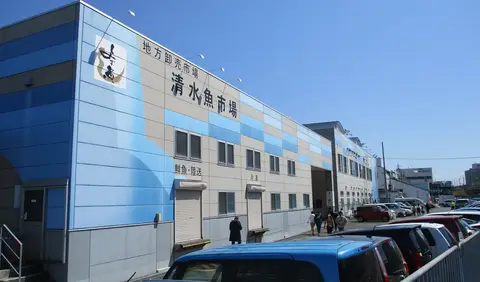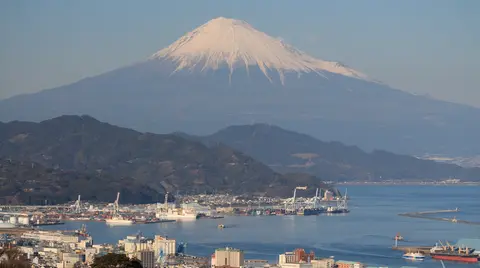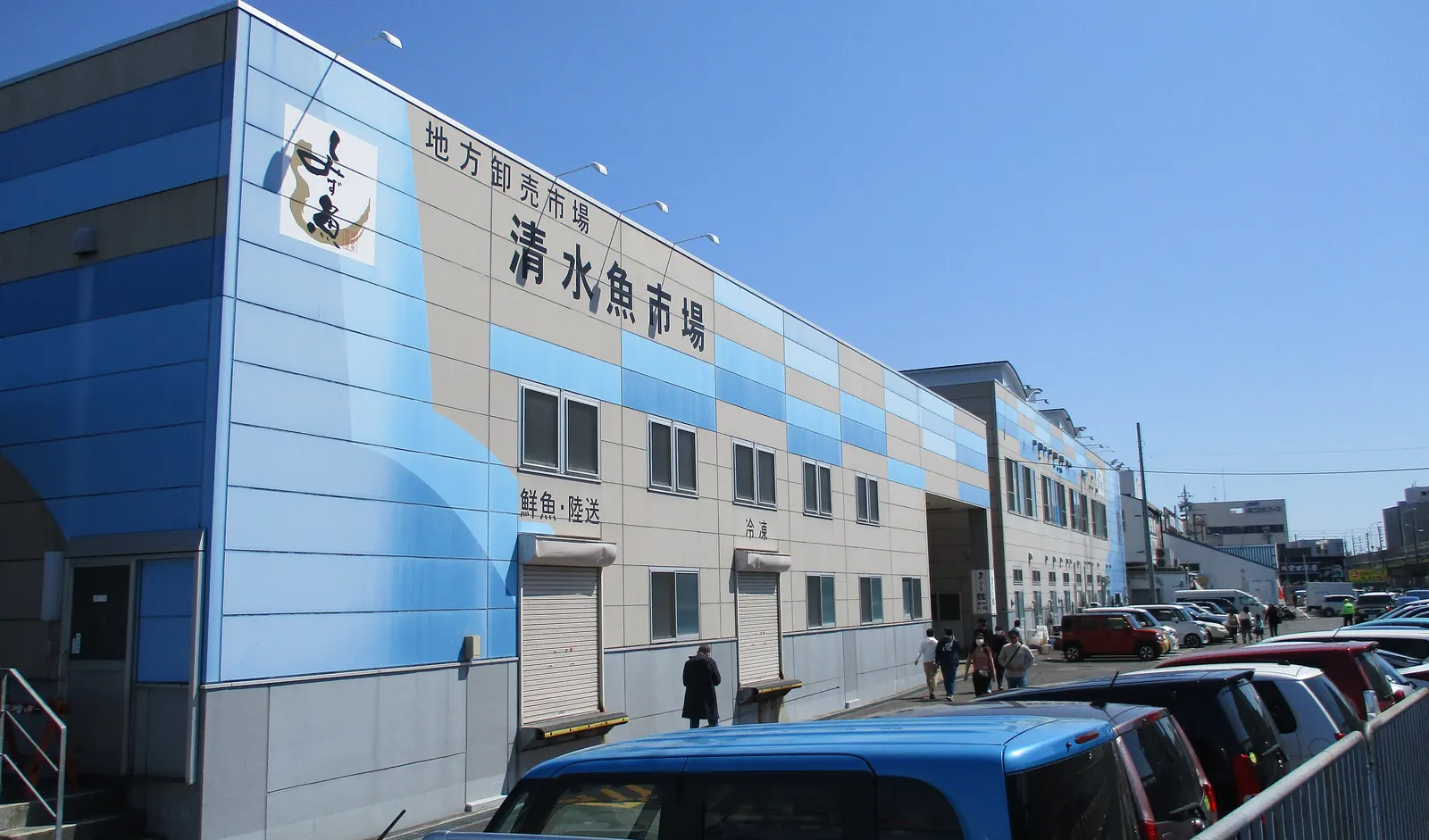
Shimizu lands more frozen tuna than any other port in Japan, and the place to eat it is a 20–25 minute walk from your gangway. Kashi-no-Ichi — literally “the riverside market” — is the single best food stop within walking distance of a Shimizu cruise call. This is a short guide to what to order, how the place is laid out, and the one day of the week that can quietly ruin the plan.
The layout: two buildings, two jobs
Kashi-no-Ichi is really two adjacent halls, and knowing which is which saves you time:
- Ichiba-kan — the market hall. Fishmongers, dried goods, wasabi, green tea, and souvenirs you can actually carry back aboard. Roughly 9:30–17:30. This is where you browse and buy gifts.
- Maguro-kan — the tuna hall. Around 14 restaurants across two floors, all built around Suruga Bay’s catch. This is where you eat.
You don’t need a reservation anywhere. You do need to mind the clock, because everyone else on your ship has the same idea at noon.
Why “Tuna Town”
Shimizu isn’t a tuna town by accident. It handles the largest catch of frozen tuna in Japan — deep-sea vessels land here from fishing grounds around the world, flash-frozen at sea, and the port’s cold-chain expertise is why the fish on your plate is so good. That’s the practical reason a humble portside market can serve otoro that would cost a fortune in a Tokyo counter: you’re eating at the source, one step removed from the boat. It also means the quality holds year-round, unlike the seasonal specialties, so a tuna bowl is the safe bet whenever your ship happens to call.
What to order in Tuna Town
The headline is tuna, and you should lean into it. A few things worth knowing before you sit down:
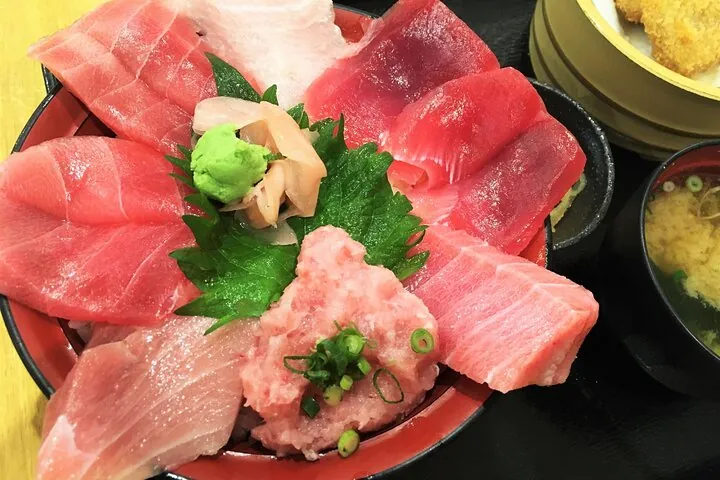
- Maguro-don (鉄火/まぐろ丼) — the classic raw-tuna rice bowl. This is the reason to come. Look for bowls that mix lean akami, fatty chutoro, and the prized otoro so you can taste the difference in one sitting.
- Tsuke-maguro — tuna marinated in soy; deeper, savorier, and a Shimizu specialty rather than a Tokyo one.
- Negitoro — minced fatty tuna, silky over rice.
- Fried tuna (maguro katsu / tuna cutlet) — a crisp, light-battered surprise for anyone who thinks they don’t like fish; often served with a squeeze of lemon.
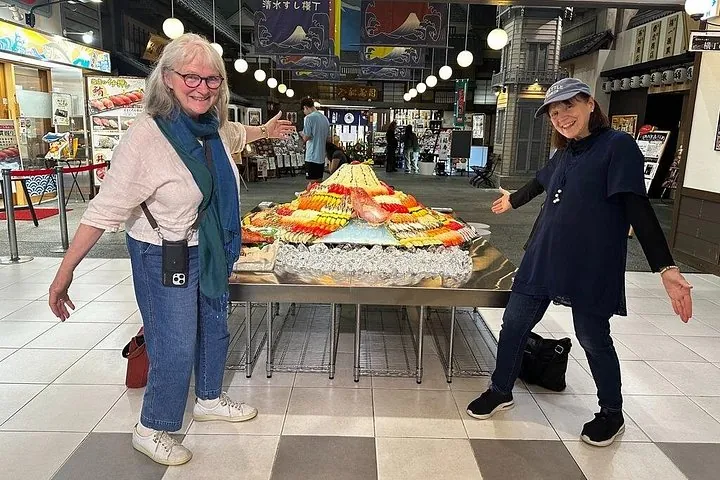
- The pile-it-on bowls — a couple of Maguro-kan restaurants are known for spooning marinated tuna over your rice until you say stop. It’s a spectacle and great value; just pace yourself.
If someone in your party isn’t a tuna person, Suruga Bay’s two other stars fill the gap: sakura shrimp (tiny sweet cherry shrimp, fished commercially in only a handful of places on earth) and shirasu (fresh whitebait). Most restaurants keep picture menus, so pointing works fine if your Japanese doesn’t.
Timing: beat the rush, and the ship
Two clocks matter here.
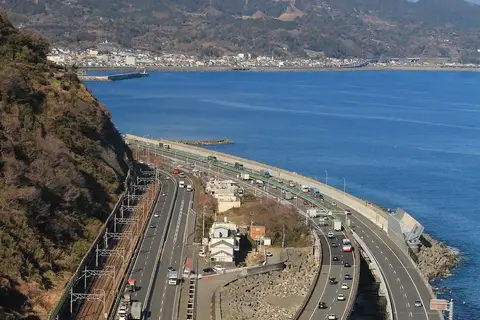
The first is the lunch rush. The Maguro-kan restaurants fill with locals and tour groups from around 11:30, and the popular counters build real queues. Go before 11:30 or after 13:30 and you’ll walk straight in. An early lunch also frees your afternoon for a view stop while the air is still clear.
The second clock is your ship’s. The rule every plan on this site is built around: be back on board 60 minutes before departure. Kashi-no-Ichi is further from the gangway than most guides say — about a 20–25 minute walk back to Hinode Pier, or 5 minutes by taxi from the rank at JR Shimizu Station next door — so put that on the clock, and a leisurely lunch still leaves comfortable margin on a mid-afternoon all-aboard. It pairs neatly with a longer morning out; our Miho no Matsubara day plan uses the market as its lunch anchor for exactly this reason.
The Wednesday problem (read this)
Here’s the caveat that trips up cruise passengers: the market hall traditionally closes on Wednesdays. Some individual Maguro-kan restaurants stay open daily, and closures can shift around national holidays, but you should not assume the whole complex is running on a Wednesday call.
The fix is simple. If your ship is in Shimizu on a Wednesday, shift your tuna plan to Sushi Yokocho inside Dream Plaza — a dozen sushi counters, open daily, serving the same Suruga Bay catch about ten minutes’ walk from the pier. Same fish, no gamble.
Unlike a Mt. Fuji view stop, Kashi-no-Ichi doesn’t care about the weather — it’s all indoors, which makes it the reliable core of a grey-sky day. If the mountain is hiding, this is where a Shimizu call is quietly saved; see If Fuji Hides for the full wet-weather circuit.
Practical notes
- Cash and cards: many stalls and smaller restaurants still prefer cash. Carry some yen; don’t assume every counter takes cards.
- Prices: tuna bowls generally start from roughly ¥1,200, with premium otoro sets running higher. Exact prices vary by restaurant — treat any figure as approximate and check the menu on the day.
- English: picture menus are common, but full English service is not guaranteed. Pointing and a smile go a long way.
- Hours vary by shop: the buildings have general hours, but each restaurant sets its own, and last orders can be well before closing. If you’re aiming for a specific place, its exact hours are best confirmed on the day.
- Buying to take back: Ichiba-kan is the spot for green tea, dried sakura shrimp, and wasabi — light, packable, and a better souvenir than anything in the terminal shop.
- You can arrive by boat: the Ejiri stop of the Miho Hagoromo water bus is the market itself — the ticket machine is on the ground floor of Maguro-kan. That makes tuna and the Miho pine grove a single ¥1,800 circuit ticket rather than two separate errands; the timings are in our water bus guide.
The bottom line
Kashi-no-Ichi is the rare cruise-port food stop that’s close, cheap, genuinely excellent, and weatherproof. Come hungry, come early or after the rush, carry cash — and if it’s a Wednesday, pivot to Sushi Yokocho without a second thought. For the full spot details, opening rhythm, and map, see our Kashi-no-Ichi page, and check the market’s official site for the current calendar before you head ashore. If this is your first call here, the complete Shimizu cruise port guide has the rest of the day — piers, shuttle, money, Wi-Fi.
Hours, closures and prices were current as of July 2026 and can change without notice — always confirm with the market or restaurant on the day.