Most cruise weather advice is a mood (“autumn is lovely”). This page is the numbers: the Japan Meteorological Agency’s 30-year normals for Shizuoka, the official station nearest to Shimizu’s Hinode Pier, plus JMA’s typhoon statistics, laid against when the ships actually call. Read the table, then the three things it tells you.
The table: what a normal month looks like
JMA 1991–2020 normals, Shizuoka station (station 47656, about 10 km from the cruise pier). Typhoon columns are the national JMA normals for storms approaching Japan (centre within 300 km of a weather office) and making landfall. The last column is the published 2026 Shimizu cruise calendar for the months the port committee and cruise lines have released so far.
| Month | Mean °C | High / Low °C | Rain (mm) | Sunshine (h) | Humidity | Typhoons approaching Japan | Typhoon landfalls | 2026 Shimizu calls |
|---|---|---|---|---|---|---|---|---|
| January | 6.9 | 11.7 / 2.1 | 79.6 | 207.9 | 57% | 0 | 0 | — |
| February | 7.7 | 12.6 / 2.9 | 105.3 | 187.5 | 57% | 0 | 0 | — |
| March | 10.7 | 15.5 / 6.0 | 207.1 | 189.9 | 62% | 0 | 0 | — |
| April | 15.2 | 19.8 / 10.6 | 222.2 | 189.7 | 65% | 0 | 0 | — |
| May | 19.2 | 23.5 / 15.1 | 215.3 | 192.0 | 71% | 0.7 | 0.0 | — |
| June | 22.4 | 26.1 / 19.2 | 268.9 | 135.9 | 77% | 0.8 | 0.2 | — |
| July | 26.1 | 29.9 / 23.1 | 296.6 | 157.9 | 79% | 2.1 | 0.6 | — |
| August | 27.4 | 31.3 / 24.2 | 186.5 | 201.8 | 76% | 3.3 | 0.9 | 6 |
| September | 24.5 | 28.4 / 21.1 | 280.6 | 157.3 | 75% | 3.3 | 1.0 | 12 |
| October | 19.4 | 23.6 / 15.6 | 250.3 | 157.7 | 71% | 1.7 | 0.3 | 22 |
| November | 14.3 | 18.8 / 9.9 | 134.2 | 173.3 | 67% | 0.5 | 0 | 6 |
| December | 9.3 | 14.1 / 4.6 | 80.7 | 200.5 | 60% | 0.1 | 0 | 1 |
| Year | 16.9 | 21.3 / 12.9 | 2,327 | 2,152 | 68% | 11.7 | 3.0 | 105 in 2025 |
Sources: JMA climate normals for Shizuoka and JMA typhoon statistics (both 1991–2020), the Shimizu Port Cruise Committee’s confirmed sheets for August–October 2026, and cruise-line itineraries for November–December 2026. The 2025 total is the port’s own count. Earlier 2026 months are past and not shown; the 2027 schedule follows the same shape, a dense March–May and a denser October.
Three things the table says
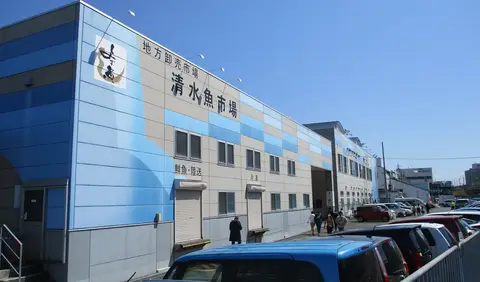
1. Shimizu is wet, and the cruise calendar peaks in a wet month. 2,327 mm a year is roughly half again what London or New York gets. October, the busiest cruise month with 22 published calls in 2026, still averages 250 mm. That is not a reason to avoid October; it is a reason to walk off the ship with a rain plan already chosen. The rainy-day circuit is here: the Verkehr museum, the roofed tuna market and Dream Plaza are all within ten minutes of the gangway.
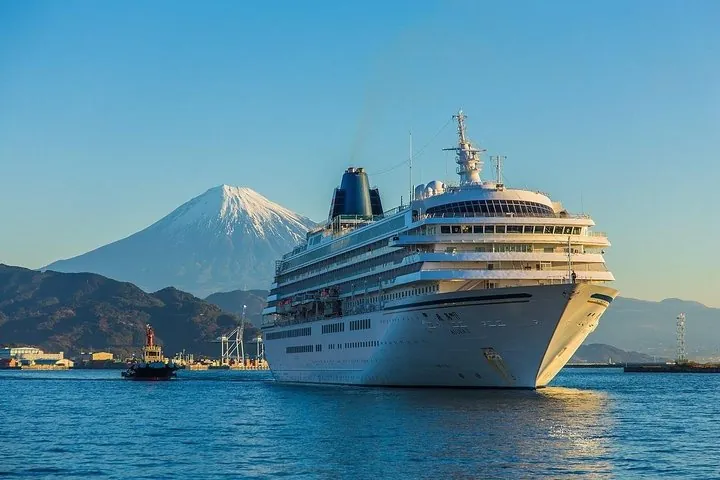
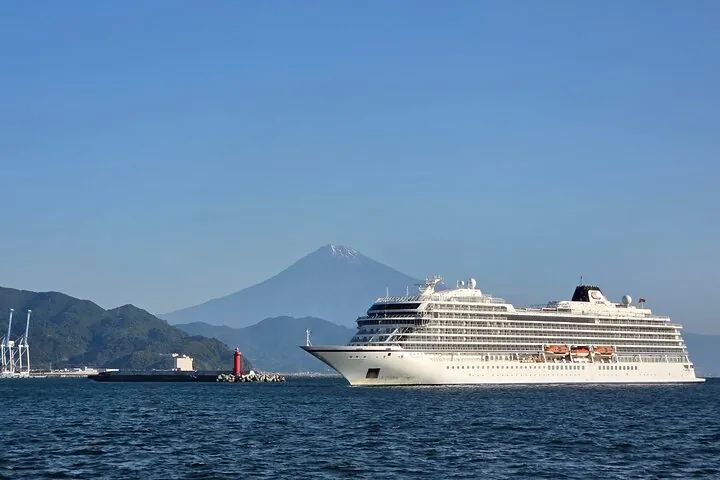
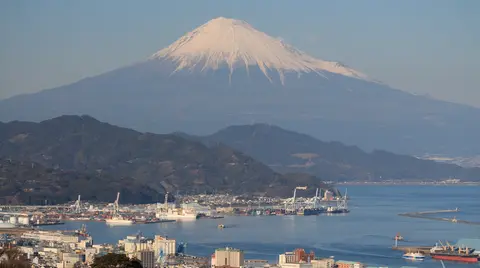
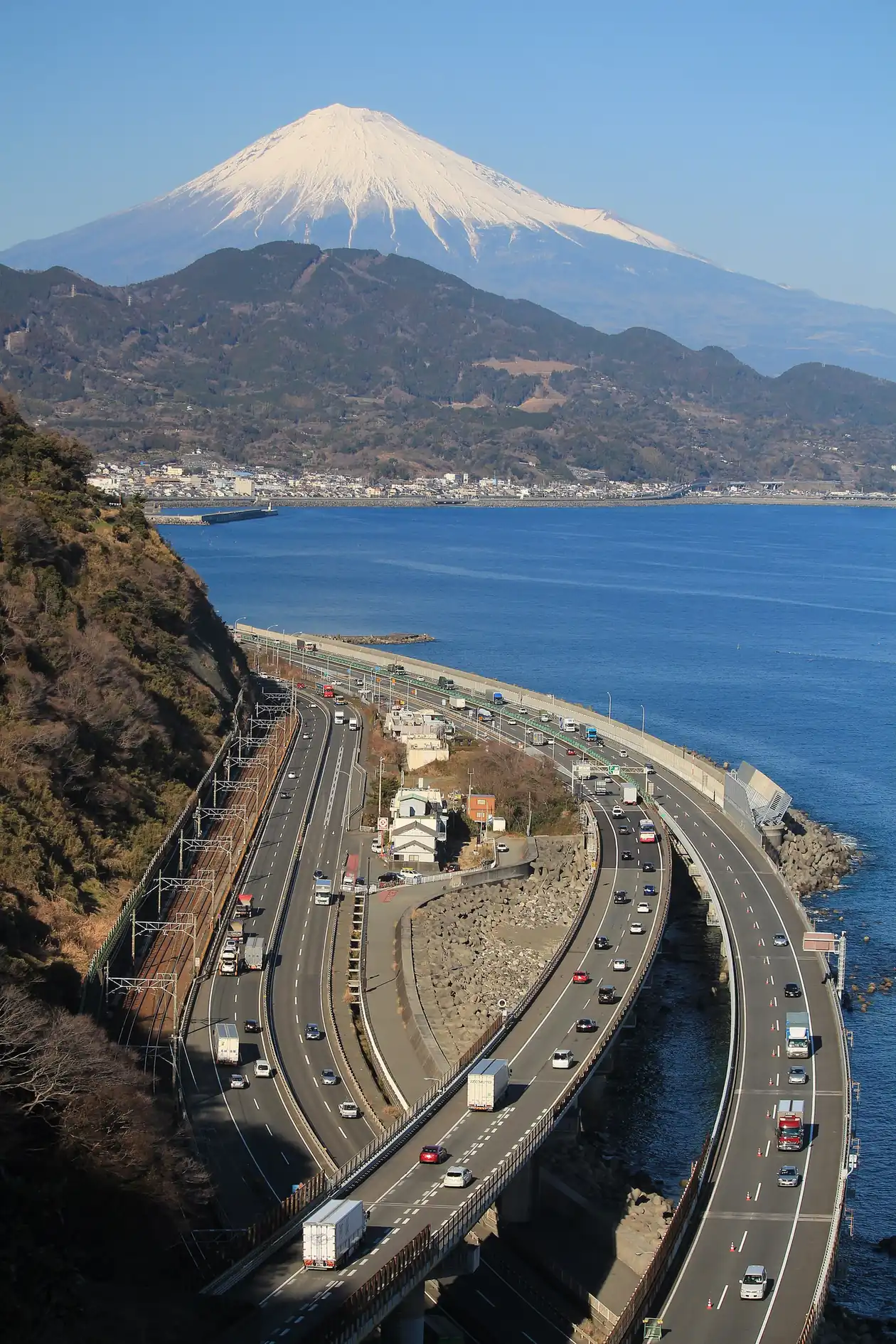
2. The dry season is the Fuji season, and it is not when most ships call. December, January and February have a quarter to a third of the summer rainfall, the year’s most sunshine (188–208 hours) and the clearest air for the mountain. The calendar is thin then. If seeing Mt. Fuji is the point of your cruise, our visibility guide and the Yokohama-versus-Shimizu comparison explain how to play the odds in the busier months.
3. Typhoon risk is concentrated in August and September and fades quickly. Nationally, 3.3 typhoons approach Japan in each of August and September, 1.7 in October and 0.5 in November. Landfalls are rarer, about three a year in total. So an early-October call carries real but shrinking risk; a late-October or November call is close to the winter baseline. The port district is flat reclaimed land beside a working harbour, and the ship, not the port, makes the call on whether to come in.
What “cancelled by weather” actually looks like
A typhoon rarely arrives as a surprise. JMA tracks are published days ahead, and cruise lines usually announce a change to the daily programme the evening before: the call is dropped, the ship arrives late and leaves early, or another port is substituted. Three practical consequences:
- Ship-booked excursions are refunded automatically when the port is missed. Independent bookings depend on the operator, so when you book a private tour, ask in writing what happens if the ship does not dock. Our shore excursions guide covers who waits for whom.
- The Water Bus to Miho is the first thing to go. It is a small boat on open bay water and stops running in strong wind or swell. On a marginal day, ask at the terminal before buying a ticket and keep Nihondaira by taxi as the weather-proof view.
- Rain alone cancels nothing. A wet October day is normal and the port runs as usual. Pack a proper rain jacket rather than an umbrella for the walk to the market; the wind off the bay turns umbrellas inside out.
Dressing for the month
- March–May (11–19 °C): layers and a rain shell. Mornings on deck are cool; afternoons in town are mild.
- August–September (25–27 °C, 75% humidity): the hot, sticky season. Shade, water and indoor stops; the market hall and Dream Plaza are roofed.
- October (19 °C): the sweet spot for walking, but the wettest of the autumn months. Rain shell, not umbrella.
- November (14 °C): crisp and clear; a light jacket for town and something warmer for sail-away on deck, when the light on the summit is the season’s real souvenir. Our October–November guide has the detail.
- December–February (7–9 °C): cold, dry and bright. The clearest mountain of the year in exchange for a coat.
Take the data
Every figure above is a published normal, so it is safe to quote. For the port’s own numbers, hours ashore, arrival patterns and what is reachable on foot, see our data page and the machine-readable next-calls feed.