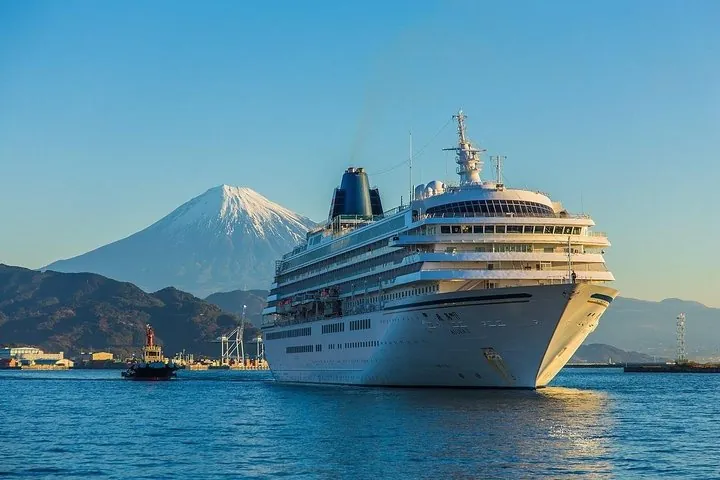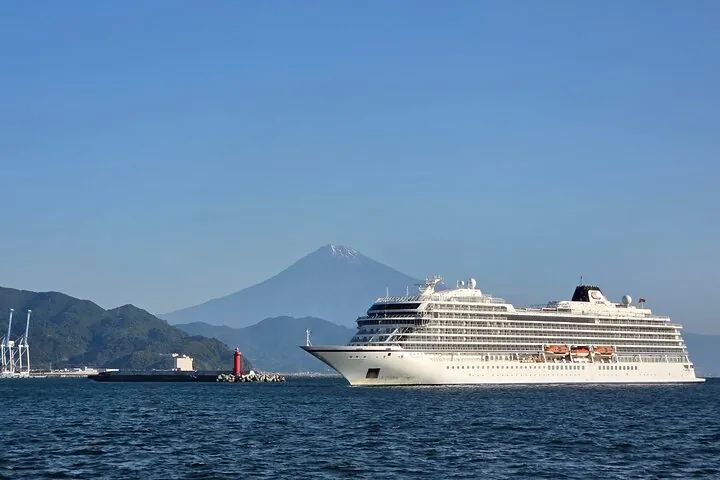
Five unglamorous minutes at the terminal set up your whole day ashore. Here’s the Shimizu-specific version of money, connectivity and the small logistics — so you can stop thinking about them.
Wi-Fi: use the terminal, then assume nothing
Free Wi-Fi is at S-Pulse Dream Plaza (network dream-plaza, all common areas), 12 minutes from the gangway — the terminal building publishes none. On cruise days a tourist information booth stands in front of the berth, 8:00–18:00, with English-speaking staff. Treat the ship and Dream Plaza as your guaranteed connections:
- Download the offline map of Shimizu/Shizuoka before you walk out (mobile coverage is fine in town but gets patchy in the hills toward Nihondaira).
- Screenshot the Water Bus return timetable and your ship’s all-aboard time.
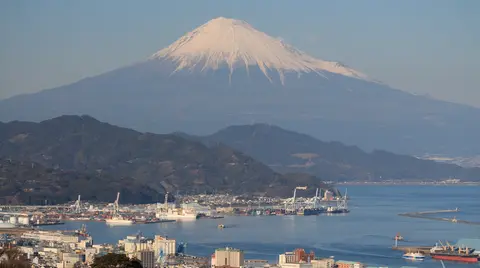
- Load the live Mt. Fuji camera once — it tells you whether a view-based plan is worth money today.
eSIM beats everything (but set it up before you sail)
The connectivity mistake cruise passengers make isn’t in port — it’s at sea. Maritime satellite roaming is the classic bill shock, so keep the phone in airplane mode offshore unless you’re on the ship’s Wi-Fi package.
For Japan days, a travel eSIM is the clean answer: install it at home before the cruise, switch it on when you step ashore, and data works for the price of a coffee. Any of the major travel-eSIM apps sells short Japan plans; what matters is doing the install before you’re on a moving ship’s satellite connection. Physical-SIM travellers: Japan barely sells tourist SIMs outside airports, so don’t plan on buying one in Shimizu.
Cash and cards: where each works
Japan is more card-friendly than its reputation, but the split in Shimizu is clear:
Cards work: Dream Plaza (all of it), sit-down restaurants, the ropeway and most attractions.
Cash is king: small counters at the Kashi-no-Ichi market, street stalls, some taxis (many take cards now, but don’t bet your return ride on it), and assume cash for the Water Bus.
The ATM answer is the Seven Bank ATM inside S-Pulse Dream Plaza (2F by the escalators, 10:00–24:00), 12 minutes from the gangway. Seven Bank runs 7-Eleven’s ATMs and takes international cards; if you need yen before 10:00, any 7-Eleven in town has the same machine. One modest withdrawal (¥5,000–10,000 per person covers a market lunch, the ¥1,000 water bus, and souvenirs) beats hunting for a bank later.
Two cultural notes that save awkwardness: there is no tipping in Japan — none, anywhere, genuinely — and small vendors appreciate smaller notes, so break the ¥10,000 note at a konbini early.
The five-minute checklist, in order
- Terminal Wi-Fi on → offline map, timetable screenshots, live camera check
- eSIM on (airplane mode off now that you’re ashore)
- Seven Bank ATM at Dream Plaza 2F (from 10:00) → withdraw ¥5,000–10,000, break the big note
- Phone photo of the ship, the pier name and your all-aboard time
- Go — the complete guide and plans by hours take it from here
And the one rule that outranks all of this: be back on board 60 minutes before all-aboard. No amount of connectivity fixes a missed ship.
Travelling as a group? Cash is also where group money gets messy — here’s how groups split costs in cash-heavy Japan, including the free no-signup splitter we built for it.