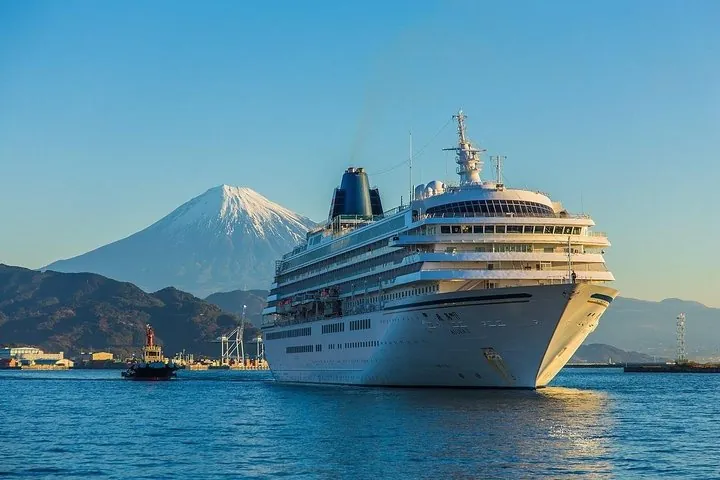
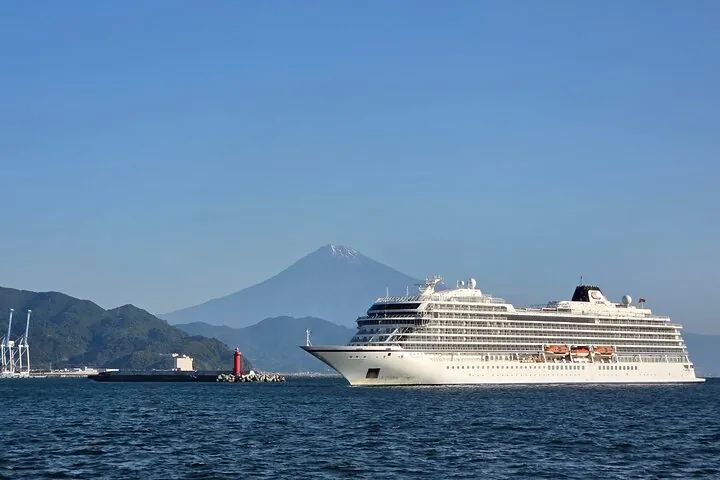
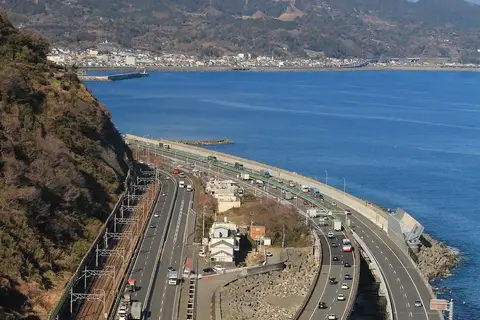
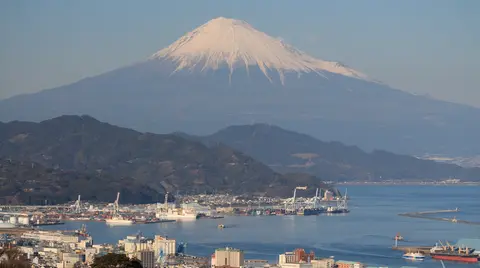
If the Shimizu cruise calendar has a main event, it’s autumn. October brings the year’s densest run of calls — new ships, back-to-back days, the first two-ship mornings — and November brings the thing everyone actually came for: a mountain you can finally see.
Here’s what genuinely changes in October and November, and how to plan a call around it.
The mountain starts cooperating
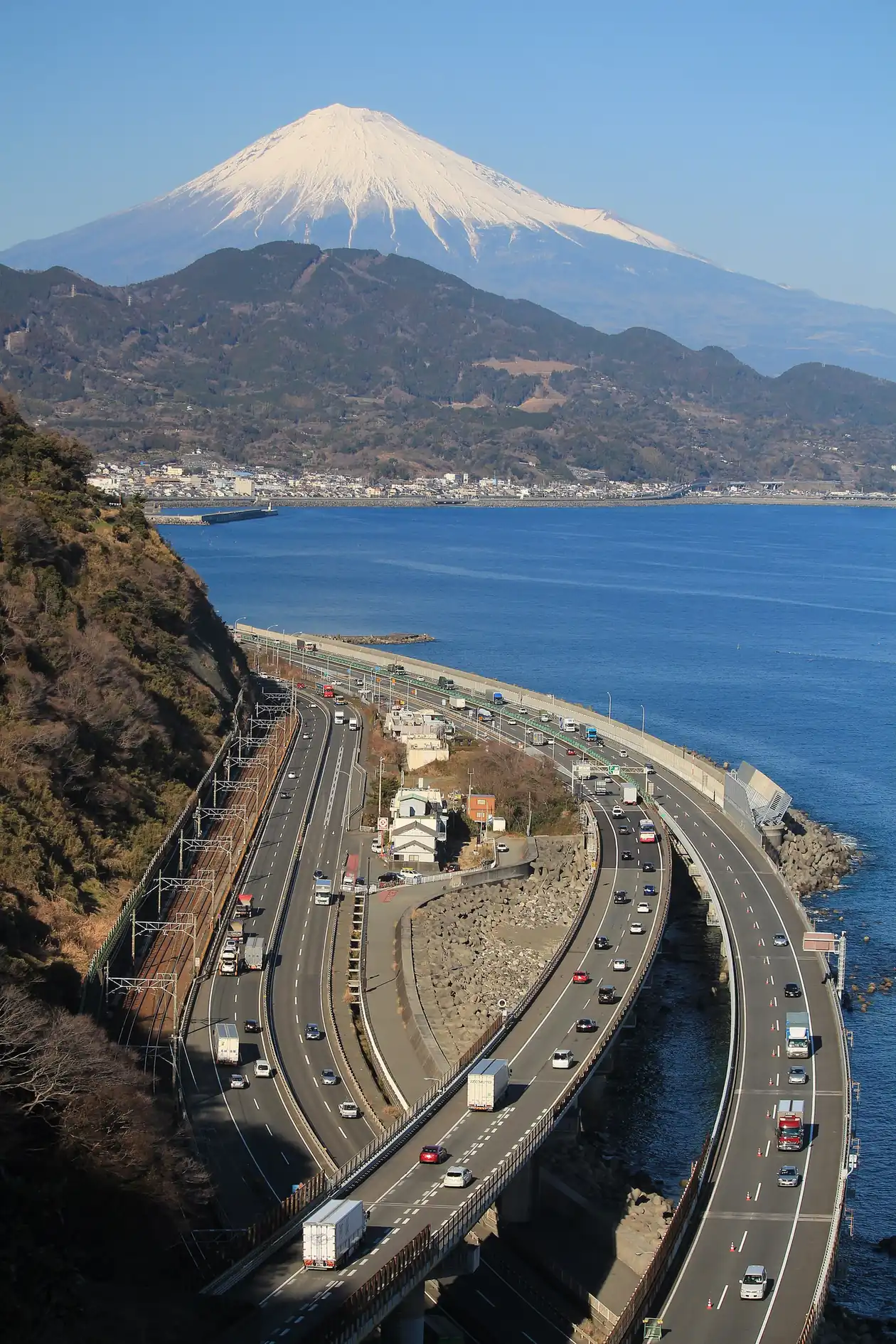
All summer we give readers the same number: Mt. Fuji shows itself clearly only 3–4 days in 10, because warm, humid air eats the view. Autumn is when that bargain improves. As humidity falls through October, clear mornings come more often; by November the summit — usually wearing fresh snow by then — appears far more reliably than in July or August.
Two rules survive the season change: mornings are still much clearer than afternoons, and you should still check the official live camera from the deck before paying anyone for a view. If the mountain hides anyway, the Plan B works in any month.
The autumn fleet — and its short-call trap
September’s regulars (Diamond Princess, Celebrity Millennium) hand over to a busy October: 18 confirmed calls, opening with Asuka III, Azamara Pursuit, Royal Princess (5 Oct) and Norwegian Jade’s first-ever visit (8 Oct). The port committee’s 5 October revision struck out Carnival Luminosa (6 Oct) and two early Star Seeker calls. November is now confirmed too — 8 calls, three of them Norwegian Jade, plus Westerdam, Seabourn Encore, Diamond Princess at a rare 07:00, and Japan’s Asuka III and Mitsui Ocean Sakura. The full calendar lives in our 2026 schedule.
Now the trap. Look at the departure times: Royal Princess sails at 14:00. Norwegian Jade at 14:30. Subtract disembarkation and our standing 60-minute margin and you have roughly five usable hours — a completely different day from Millennium’s 11-hour calls.
If you’re on one of those short calls, plan like it:
- Stay walkable: the fish market, sushi and bayfront circuit keeps you 10 minutes from the gangway all morning.
- One compact highlight: the 4-hour plans fit, including a taxi run to Nihondaira if you fix the return pickup.
- Two-hour bookable experiences exist precisely for this: the temple Zen & matcha morning or the food crawl.
- Skip: Hakone, Gotemba, Fuji-area day trips. The maths says no, whatever the brochure says.
Sakura shrimp: the November bonus
Suruga Bay is the only place in Japan where sakura shrimp are landed, and the autumn fishery typically opens in late October and runs to late December (2025’s season ran 29 October–24 December; each year’s dates are set by the fishing cooperative). For November callers this is the seasonal eat: raw or in crisp kakiage fritters at Yui, one stop up the coast — the Yui & Old Tokaido plan builds the half-day around it. Early-October callers usually just miss the opening; the dried and frozen versions at the Kashi-no-Ichi market are the fallback.
Weather, in one paragraph
Early October still carries the tail of typhoon season — if one is anywhere near, expect the Water Bus to stop and build an indoor day instead. From mid-October the pattern settles into the best weather of the year: crisp, clear mornings around 15–20°C, cooling toward single digits by late November. Bring a layer for the deck at sail-away; the light on the snow-capped mountain at dusk is the season’s real souvenir.
Book earlier than you think
Autumn is when the port is busiest and the private-tour supply is smallest per passenger. The well-reviewed operators’ vehicles go first — if a private tour with port pickup is your plan, book it when your cruise confirms, not on the pier. And on any two-ship day, check your berth the night before: an Okitsu assignment changes your whole morning.
First call at this port? Start with the complete Shimizu guide — then come back and enjoy the good-weather version of it.