Most World Heritage listings honour buildings, cities, mountains. At Miho, UNESCO effectively honoured a story: the pine grove on this black-sand spit is inscribed as part of the Mt. Fuji site because of what people have imagined here for a thousand years — a fisherman, a feathered robe, and a dancer who went home to the sky. If you’re going to walk twenty minutes from the water-bus pier to look at a tree, you deserve the whole story, properly told.
The bargain on the beach
A fisherman named Hakuryo was walking the shore one morning when he found a robe of white feathers hanging on a pine — beautiful beyond anything woven by human hands. He decided to keep it.
Then its owner appeared: a tennyo, a celestial maiden, and without the robe she could not fly home. She begged. He refused — finders keepers. She wept, looking at the sky “where the geese were flying home without her,” and the sight broke his resolve. He offered a trade instead: the robe for the one thing no one on earth had seen — her dance.
She put on the feathers and danced the dance of the moon palace over the beach, and as she danced she rose — over the pines, over the bay, past the snows of Mt. Fuji, thinning into the haze until she was sky. That’s the whole legend. No moral, no punishment — just a moment when heaven touched a working beach and a fisherman had the sense to ask for beauty instead of treasure.
Why this beach owns the story
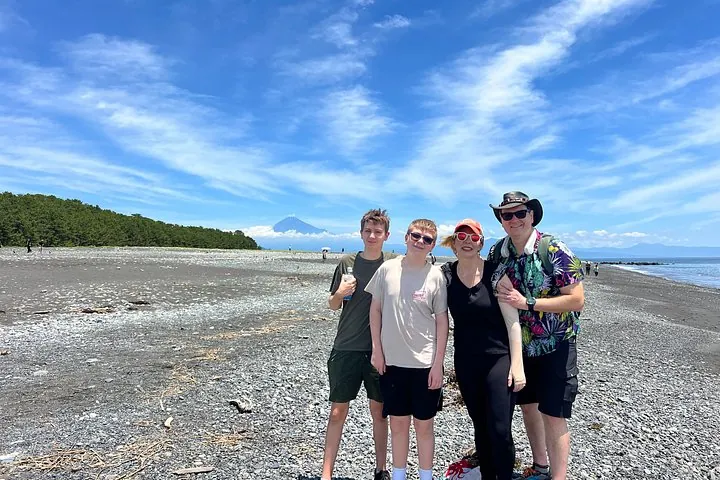
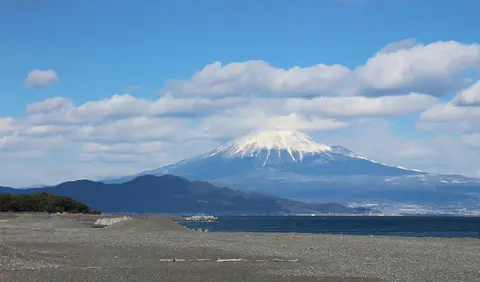
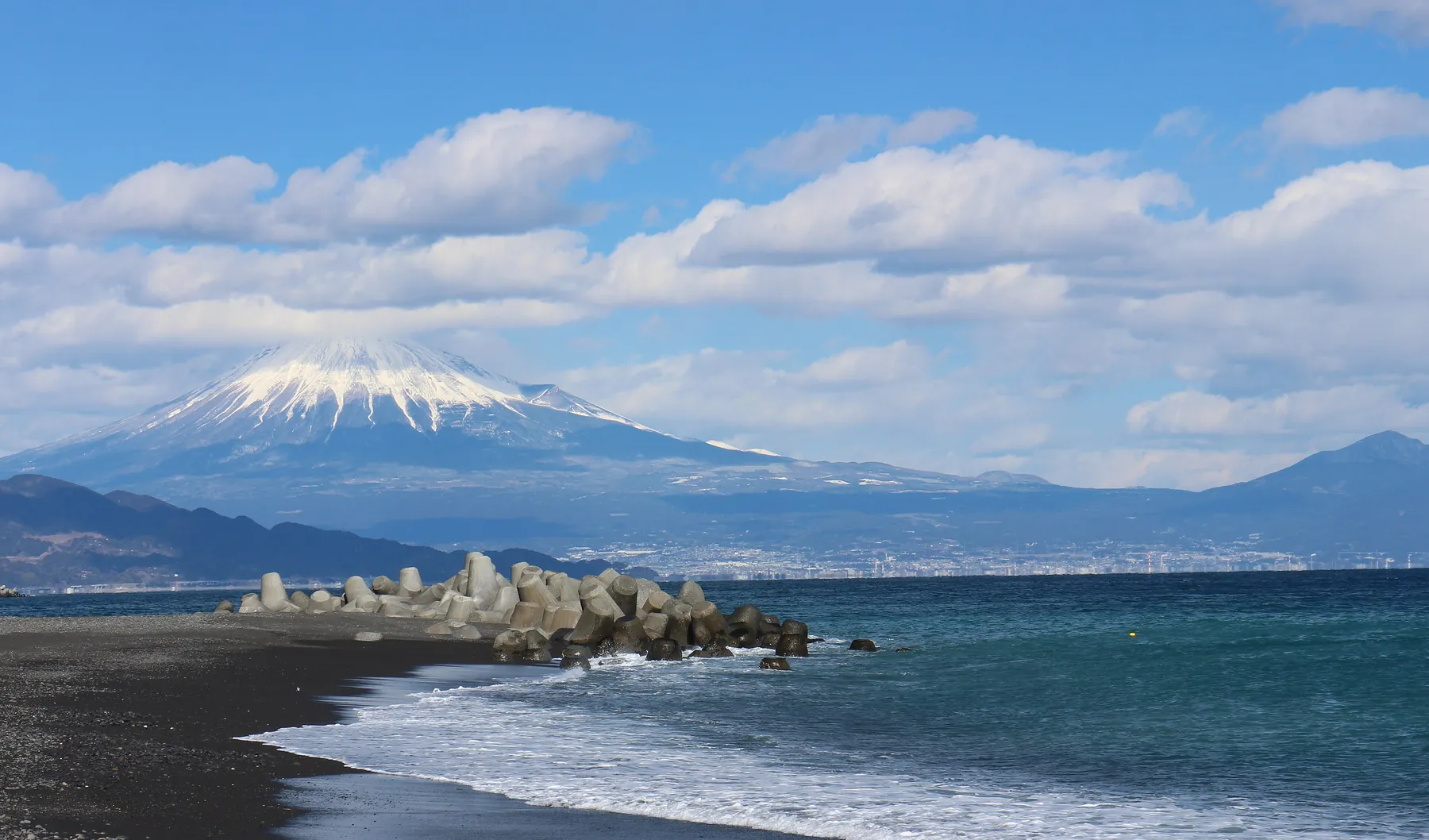
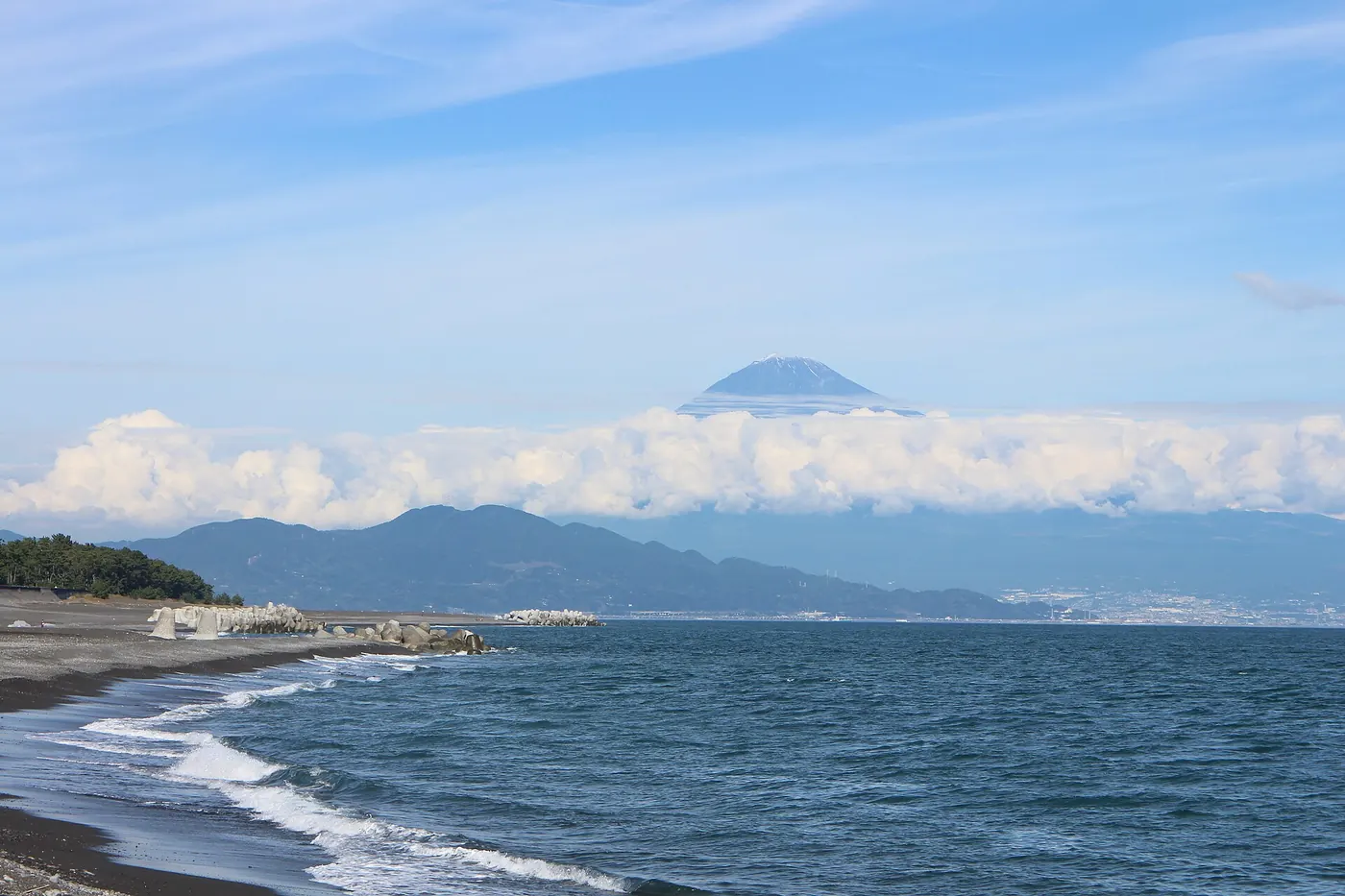
Stand on the shore and you understand the casting. Suruga Bay runs deep blue to the horizon, the pines lean like dancers mid-step, and on a clear morning Fuji floats above the water exactly where a rising goddess would pass. Painters knew it: this composition — Fuji over the bay, framed by Miho’s pines — appears in centuries of woodblock prints, and it is the reason the grove was folded into Fuji’s World Heritage inscription in 2013 as a “source of artistic inspiration.”
The legend’s furniture is all still here, walkable in an hour:
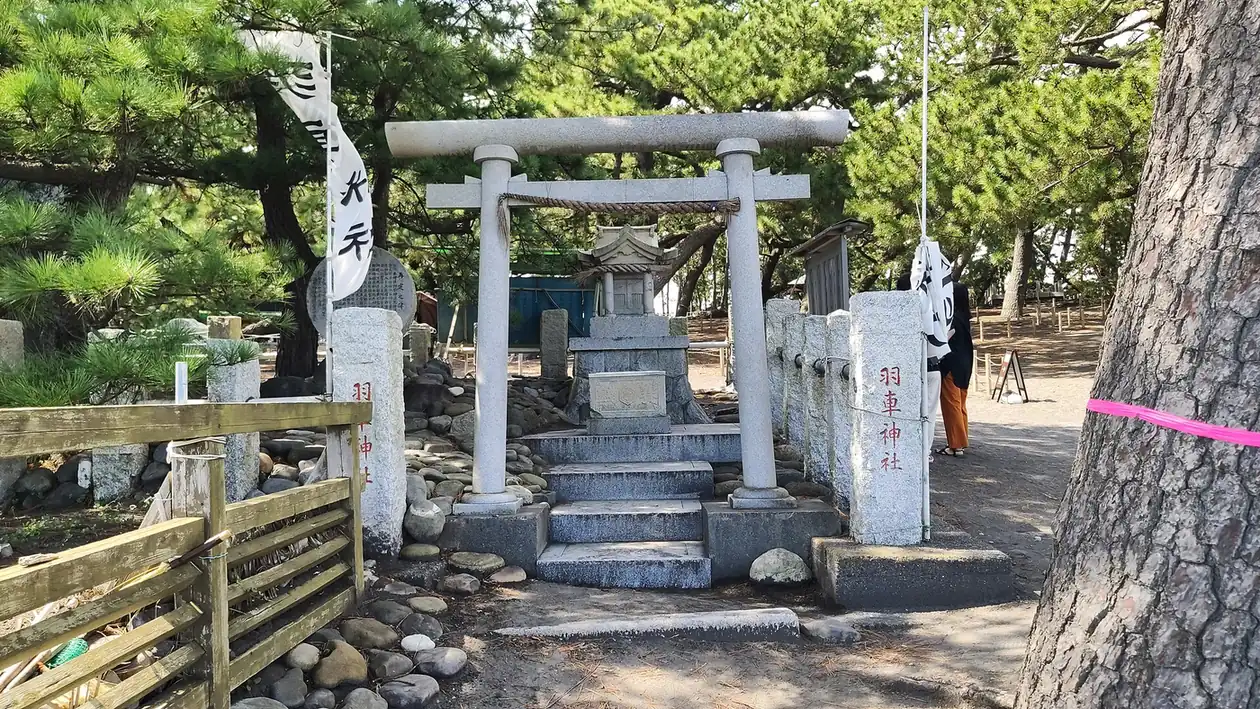
- The Hagoromo pine — third of its name; its aged predecessor was honourably retired. Beside it stands the small torii of Hagoruma Shrine.
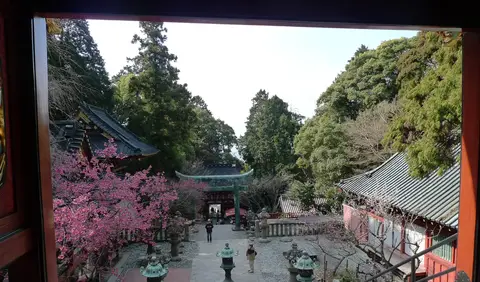
- The God’s Road (Kami no Michi) — a raised walkway through an avenue of old pines linking the beach to Miho Shrine, which keeps a relic said to be a fragment of the robe itself. Whatever your faith in that claim, the 500-metre walk under the pines is the most atmospheric part of the site.
- Mihoshirube — the free cultural centre (9:00–16:30 daily, six languages) that tells the legend and the grove’s story properly. A good rain backstop.
The Noh play — and the French dancer
The reason this beach story conquered Japan is Zeami’s Noh play Hagoromo, one of the most performed works in the classical repertoire. The play compresses the legend into a single hour of moonlit dance; each autumn it comes home, performed by firelight on the beach with the pine and — weather willing — Fuji itself as the set.
And here is the detail we find most moving. In postwar France, a young dancer named Hélène Giuglaris fell under the play’s spell and devoted herself to performing Hagoromo — a work she never saw staged in the country of its birth. She died in 1951, in her thirties, without ever reaching Japan. Her husband carried a lock of her hair to this beach, and the people of Miho raised a monument to her among the pines, where it stands today. The maiden who longed for the sky, honoured by a dancer who longed for this shore — the legend, it turns out, still collects people.
Making the visit work
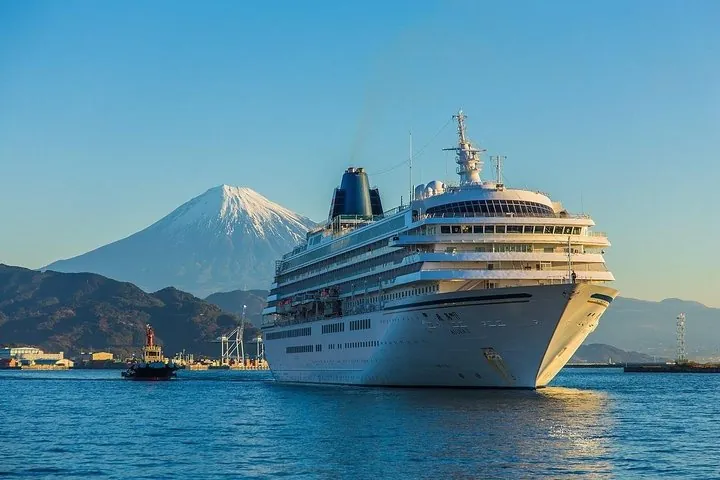
The practical numbers live in our water bus guide, but the short version: ¥1,000 a leg — about 25 minutes out via Ejiri, 15 back on the Miho Hagoromo Line from Hinode Pier, then a flat 20-minute walk to the grove — a genuine half-day round trip, best on calls of 4 hours or more. Mornings are clearest for Fuji, and the mountain shows itself clearly only 3–4 days in 10 — if the summit is hiding, the If Fuji Hides page is your Plan B, and the story above still works in any weather.
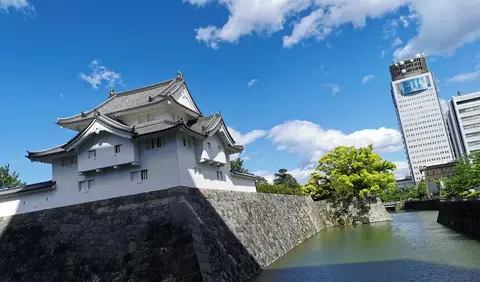
Coming by land instead? From JR Shimizu Station (11 minutes from Shizuoka on the local JR line), buses reach Miho in about 25 minutes — or walk five minutes to the Ejiri pier and take the same water bus across, which is more fun. The timed cruise version of the day is our Miho itinerary.