The excursion desk makes it sound simple: pay once, step onto a coach, see Mt. Fuji. For many independent couples calling at Shimizu, though, the ship’s Mt. Fuji tour is the single most expensive line item of the day — and it buys you the same shrine, the same ropeway and the same viewpoints you can reach on your own for a fraction of the price. This is a number-by-number comparison so you can decide with your eyes open.
We are not anti-excursion. There are good reasons to book one, and we get to those at the end. But first, the math.
What the ship’s tour actually costs
Ship-operated “Mt. Fuji area” tours out of Shimizu — the half-day ones visiting a viewpoint plus a shrine or the World Heritage Centre — typically land around US$150 per person and up, and full-day Fuji-and-Hakone versions run higher. Two people can therefore spend $300 or more before lunch. Private van tours booked independently sit in a similar range: several operators advertise from roughly $277–$308 per group for a 5–6 hour Fuji-area circuit, which is where the per-couple economics start to shift. (Exact 2026 fares change by ship and operator — treat these as ballpark, to be confirmed at your excursion desk.)
That price usually bundles transport, a guide, and entrance fees. The convenience is real. The question is how much of it you’re actually using.
The same day, done yourself
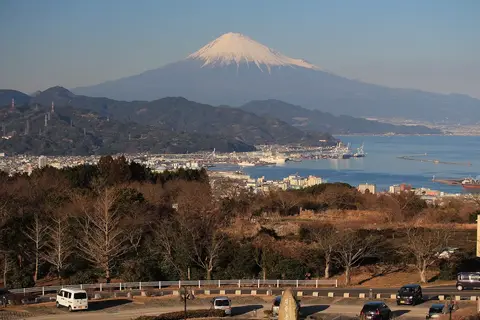
The classic Shimizu Fuji-view route is Nihondaira → Kunozan Toshogu: a 360° observatory for the mountain, then a short ropeway down to a gold-lacquered National Treasure shrine. You can do the whole thing independently. Here’s the breakdown, per person, in verified public fares:
- Taxi, Hinode Pier → Nihondaira Yume Terrace: about ¥3,500 one way (roughly 20–25 minutes). Split between a couple that’s ~¥1,750 each way, each. Agree your return pickup with the driver before you get out — taxis do not cruise for fares at the viewpoint.
- Nihondaira Ropeway, round trip: ¥1,250 for adults, down to Kunozan and back (the ride itself is about five minutes each way).
- Kunozan Toshogu admission: ¥700 for the shrine, or ¥1,200 for the combined shrine-and-museum ticket (adult). These rates rose in April 2025, so ignore older guides quoting ¥500/¥800.
Add it up and a couple sharing a taxi is looking at very roughly ¥12,000 total (~US$80 for two) for transport and entries — against $300+ for the equivalent guided version. The gap, comfortably over $200, is the “convenience premium” the excursion desk isn’t going to itemise for you.
If the taxi feels like the expensive part, it is — and it’s optional. The Shimizu Water Bus crosses the harbour to Miho no Matsubara — about 25 minutes out, 15 back — for ¥1,000 a leg, giving you the ukiyo-e Fuji-over-the-pines view for pocket change. And a free city shuttle generally runs between the pier area and JR Shimizu Station, from which trains reach Shizuoka City and beyond. The shuttle has historically been slow to start on some mornings, so don’t build a tight plan around it.
The timing math (this is where tours earn their keep)
Money is only half the comparison. The other half is your all-aboard time, and it is non-negotiable. Our whole site runs on one rule: take your all-aboard time and subtract 60 minutes of safety margin. That’s your real deadline for being back at Hinode Pier. Ships do sail without stragglers, and independent travellers carry that risk themselves — a ship’s tour, by contrast, is contractually held for its own late buses.
So the DIY route only makes sense if it fits inside your margin:
- Hinode Pier to Nihondaira is 20–25 minutes by taxi each way. Add the ropeway, the shrine, and photos, and the Nihondaira–Kunozan loop is a comfortable half-day — plan on 4–5 hours door to door.
- With a 7:00 arrival and a 16:00 all-aboard, your working deadline is 15:00, and this route fits with time to spare. See the full worked plan on our Nihondaira & Kunozan itinerary or browse everything that fits a 5–6 hour call.
- With a short call or an afternoon arrival, it does not fit — and neither does the ship’s version, really. Stay closer: a walkable market-and-sushi morning keeps all your margin intact.
The trade is this: you’re saving $200 by taking on the responsibility of watching the clock yourself. If that thought makes your holiday worse, the tour is buying you peace of mind, and that’s a legitimate purchase.
The catch nobody prices in: the mountain
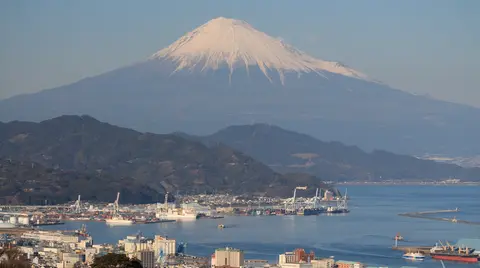
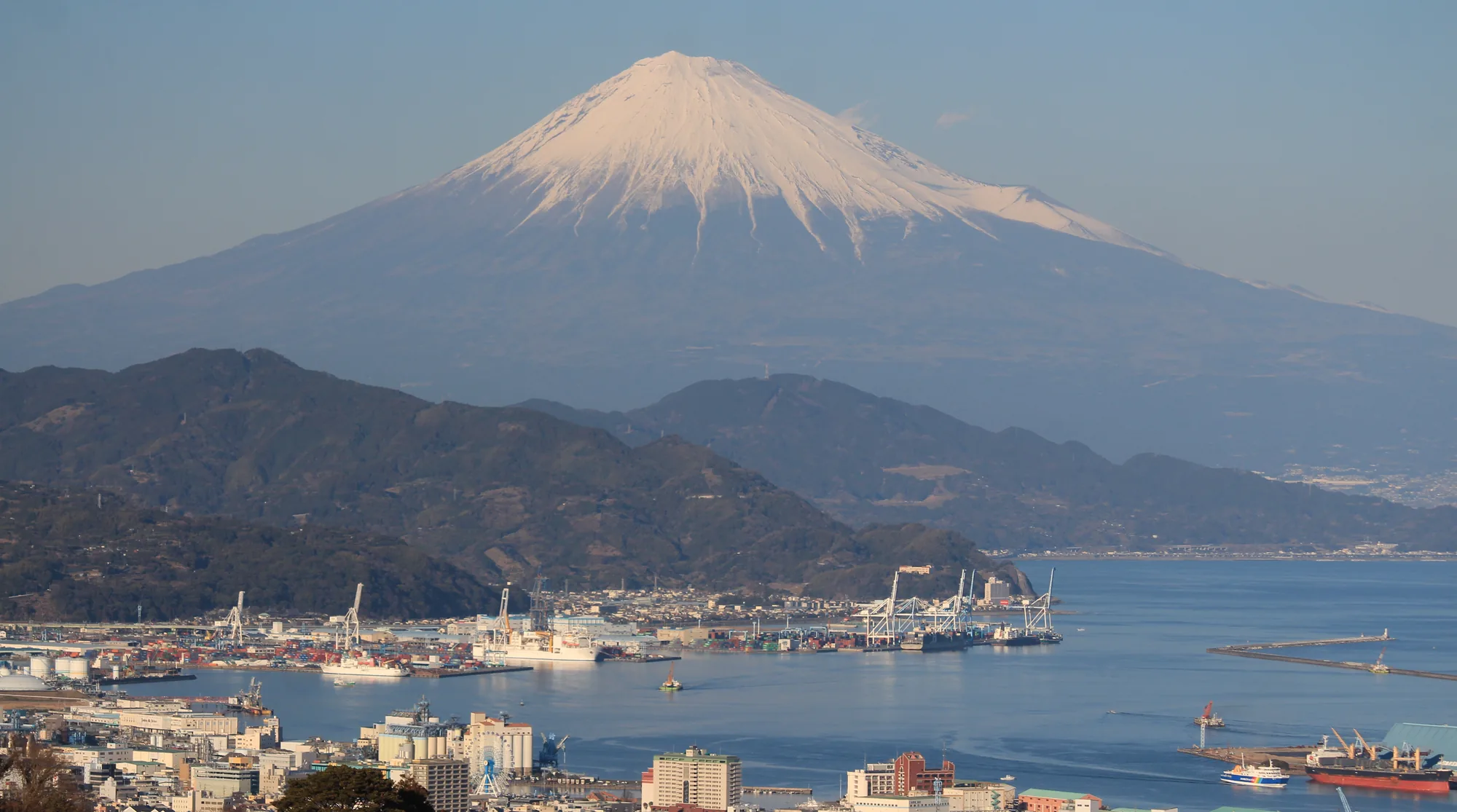
Here is the line item that should give every “Mt. Fuji tour” buyer pause. Mt. Fuji is clearly visible from the Shimizu area only about 3–4 days out of 10, and cruise season — spring through autumn — is the hazier half of the year. The summit is at its clearest early, roughly 6:00–8:00, then dissolves into afternoon haze. Neither a $300 tour nor a $80 taxi can conjure the mountain if it’s hiding.
The difference is what you’re out if it does. Before you commit to anything, load Shizuoka Prefecture’s live Fuji camera on the terminal Wi-Fi: the official Shimizu live camera updates roughly every minute. The deck rule works too — if you can’t see the foothills from your cabin balcony, don’t spend $300 chasing a view that isn’t there. And if the mountain is out, we’ve written a full Plan B in If Fuji Hides: the tuna market, Kunozan in the mist, and a rainy-afternoon indoor circuit that needs no summit at all.
A note on closures
Independent plans live or die on opening days, and the excursion desk won’t flag these for you:
- Kashi-no-Ichi fish market is closed on Wednesdays — a genuinely common cruise-call weekday. If your call is a Wednesday and you were counting on the tuna, rebuild the morning around Dream Plaza or Nihondaira instead.
- The Water Bus is suspended in rough weather, so keep a taxi fallback in mind for a Miho run on a blustery day.
- Ropeway and shrine hours are seasonal; confirm same-day fares and closing times at the source. Official references: the Nihondaira Ropeway and Kunozan Toshogu websites.
So which should you book?
Do it yourself if: you’re a couple who’ll share a taxi, you have a morning arrival with a 16:00-or-later all-aboard, and you’re comfortable owning your own timeline. You’ll see the identical Fuji, the identical shrine, and keep $200 for dinner in Shizuoka.
Book the tour if: your call is short or arrives late, you’d rather not track your own return, mobility or language is a real concern, or the certainty of a held bus is worth more to you than the savings. That’s a fair reason, not a failure of planning.
Whatever you choose, decide before you disembark — check the live camera, know your minus-60 deadline, and don’t pay for a view the weather won’t deliver.